WHAT IS THE WLTP CYCLE?
The WLTP (Worldwide Harmonized Light Vehicles Test Procedure) is a standardized test that measures the range of an electric vehicle under ideal conditions (23°C, thermal comfort OFF, average speed of 46 km/h in the combined cycle). It provides a useful estimate of the distance that can be traveled on a full charge. However, everyday driving conditions, such as weather, driving habits, and terrain, can affect the actual range. While the WLTP figure offers a helpful guideline, the distance achieved may vary depending on how and where the vehicle is used.
The official certified range values of an electric vehicle are obtained through homologation tests in accordance with EU Regulations 1151/2017 and 443/2023 (the “Regulation”).
The certification of electric driving range (Pure Electric Range, “PER”) is carried out on a chassis dynamometer (roller test bench). The test cycle used is the Worldwide Harmonized Light Vehicles Test Cycle (“WLTC”), described in detail in the Regulation. The WLTC is part of a broader procedure, known as the Worldwide Harmonized Light Vehicles Test Procedure (WLTP), which also includes additional tests required for vehicle homologation.
The WLTC test simulates a mixed driving distance of 23,27 km and lasts 30 minutes. The phases of this cycle are:
• Phase 1 (LOW): 3,095 km over 589 seconds, with a maximum speed of 56,5 km/h and an average speed of 18,9 km/h;
• Phase 2 (MEDIUM): 4,755 km over 433 seconds, with a maximum speed of 76,6 km/h and an average speed of 39,5 km/h (Phases 1 and 2 combined simulate urban driving, i.e., the “City” segment);
• Phase 3 (HIGH): 7,161 km over 455 seconds, with a maximum speed of 97,4 km/h and an average speed of 56,7 km/h;
• Phase 4 (EXTRA-HIGH): 8,254 km over 323 seconds, with a maximum speed of 131,3 km/h and an average speed of 92,0 km/h.
The test starts with the vehicle conditioned to an ambient temperature of 23°C. The high-voltage battery must be charged to 100%, and the WLTC cycle is performed until the battery is fully depleted.
The PER is determined based on the ratio between the energy discharged over the entire test and the consumption measured during the first and second repetitions of the WLTC cycle.
Similarly, the City range is determined by the ratio between the total discharged energy and the consumption derived from the combination of the four segments consisting of Phase 1 + Phase 2.
The chassis dynamometer simulates driving resistance (based on certified track testing or equivalent data) and vehicle inertia. No use of cabin heating or air conditioning is included, meaning both remain switched off. Vehicle lights are also switched off, except for daytime running lights.
The estimated range (km) displayed by the vehicle may not necessarily match the certified WLTP value, even when the battery state of charge is 100%. This is because the displayed range is calculated using an algorithm that considers the energy stored in the battery and may also take into account consumption from previous trips (which can vary depending on speed, driving style, load, etc.), cabin thermal comfort settings (air conditioning/heating), and the influence of external temperature (affecting both cold and hot conditions).
Therefore, the remaining range displayed at 100% charge may differ from one vehicle owner to another and may also vary from day to day for the same owner.
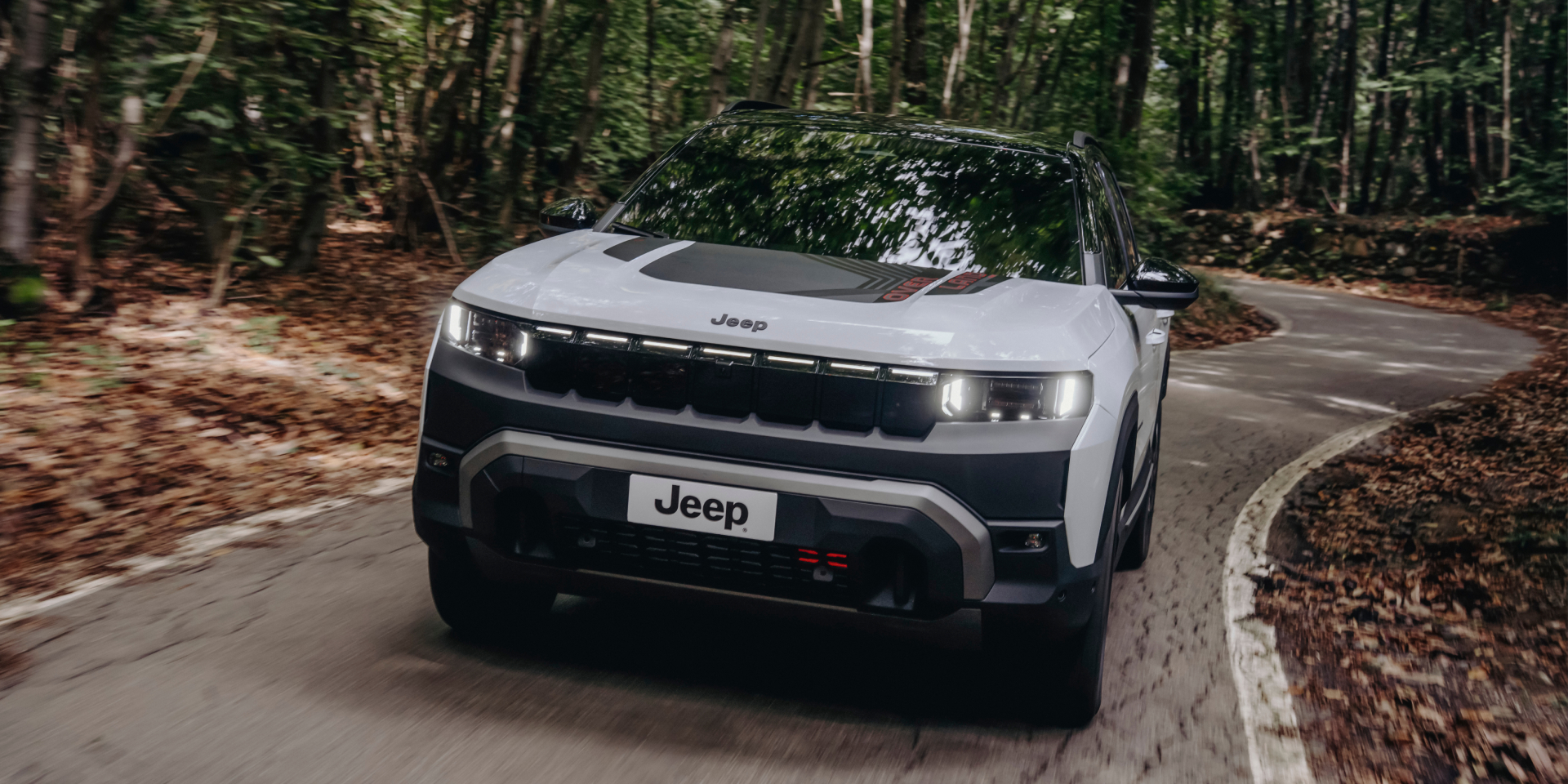
The New Jeep® Compass 4xe Full-Electric offers a range up to 600 km, depending on the trim level or selected options, with a 96 kWh battery, according to the WLTP combined cycle.
Want to know how many kilometres your Jeep® can cover based on your driving style? Try the simulator and discover how to improve your 100% electric driving experience!
DISPLAYED RANGE AND CONDITIONS OF USE
DISPLAYED RANGE AND CONDITIONS OF USE
The estimated range (km) shown on the vehicle display is an estimate that may change over time. The value shown takes into account several factors, such as driving style, speed, vehicle load, outside temperature, and the use of air conditioning or heating. For this reason, the displayed range may change during use and may differ from that of other users.
In the case of Compass, when the battery state of charge is 100%, the display shows the WLTP range. Once you start driving, the estimated range (km) is progressively updated based on real consumption and driving style, also taking into account the distance covered in the period immediately before the instant range prediction.
As a result, when the state of charge drops below 100%, the displayed range (km) adapts to the vehicle’s real use and may vary over time. For each owner, the value shown at 100%
FACTORS THAT IMPACT RANGE
The vehicle’s real-world driving range, compared to homologation values, may decrease by up to 30% on average at ambient temperatures between 20–35°C, and by up to nearly 50% at temperatures between -15°C and -5°C, due to the combined effect of the primary and secondary factors described below.
PRIMARY FACTORS
1. Real usage profile, which may lead to a reduction in range of up to 50%, and includes:
• Speed: energy consumption increases significantly with higher speeds due to the greater power required.br> • Driving Style: aggressive driving, with rapid acceleration and harsh braking, can drain the battery much faster, as it reduces the amount of energy recoverable through regenerative braking and increases the use of the mechanical braking system. Conversely, a smooth driving style with gradual acceleration and mindful braking can help limit the reduction in real-world range to around 20%.
• Route type: different types of routes (urban, extra-urban, and highway) result in varying degrees of impact on real-world range reduction.
2. Climatic conditions
• External temperature: at extreme temperatures, both cold and hot, the usable battery capacity decreases, resulting in a reduction in range of up to 45%. For example:
• at 50 km/h and 0°C, range may decrease by up to 40%;
• at 50 km/h and 35°C, range may decrease by up to 25%;
• at 130 km/h and 0°C, range may decrease by up to 20%;
• at 130 km/h and 35°C, range may decrease by up to 5%.
• Heating/Air conditioning: energy consumption due to cabin heating or air conditioning can significantly reduce range. For example:
• from 20°C to 0°C, with heating/air conditioning in use, range may decrease by up to 40%;
• from 20°C to 40°C, with heating/air conditioning in use, range may decrease by up to 20%.
3. Battery age and health (State of Health – SOH)
A battery’s ability to retain charge decreases over time and with use. This is an inherent characteristic of all batteries and results from multiple secondary reactions governed by complex physical and chemical mechanisms.
The reduction in battery capacity can be compared to a fuel tank that gradually shrinks over time, meaning that a “full tank” will correspond to a lower total amount of energy, resulting in reduced driving range.
Therefore, a decrease in the battery’s residual capacity will lead to a proportional reduction in driving range.
It is reasonable to expect that over a period of 8 years or 160,000 km, the battery’s charge capacity will not fall below 70%.
Several factors influence the extent of battery capacity degradation during its operational life, and its lifespan can be extended by following some best practices:
• If fast charging is not necessary, prefer standard (AC) charging over fast (DC) charging;
• Adopt a smooth driving style, maintaining as constant a speed as possible and avoiding harsh acceleration, to reduce energy consumption and battery load over time;
• Prefer charging the battery to 100% only before long trips. For daily use, it is recommended not to exceed 80% charge;
• In case of long parking periods, maintain a medium state of charge rather than leaving the vehicle fully charged, especially in high ambient temperatures;
• In hot weather, it is advisable to park the vehicle in the shade or in a garage.
SECONDARY FACTORS
1. Vehicle weight and load: a heavier vehicle or one carrying a greater load requires more energy, both during acceleration on flat roads and when maintaining a consistent speed on inclines. The impact of weight on real-world range is more significant when the road profile is winding and the driving style is agressive.
2. Terrain and route: routes with frequent uphill segments or rough terrains require more energy compared to flat routes. The road profile can become a highly impactful factor, especially when combined to higher vehicle weight and load conditions.
3. Tire pressure and conditions: underinflated or damaged tires affect the actual energy required for traction, increasing rolling resistance and reducing energy efficiency, and thereby range.